
What Is Window Capping and Why Does It Matter?

When I meet with homeowners for a window replacement estimate, one question often comes up:
"What exactly is window capping?"
It's a fair question. Unless you've replaced windows before, you've probably never heard the term. But window capping is one of the most important finishing touches of a quality installation.
In fact, it's one of the best ways to protect your home from moisture while giving your new windows a clean, finished appearance.
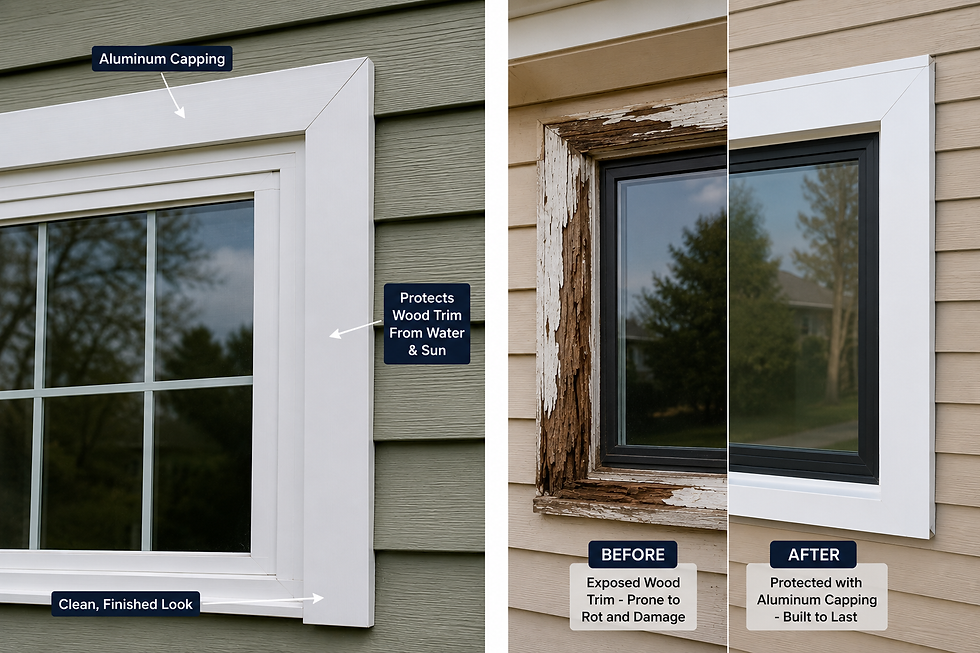
What Is Window Capping?
Window capping is the process of covering the exterior wood trim around a window with custom-formed aluminum.
Each piece is measured and bent specifically for your home, creating a protective barrier that shields the wood from rain, humidity, sun exposure, and the changing weather conditions we experience here in Georgia.
When installed correctly, it blends beautifully with your new windows and requires very little maintenance.
Why Do We Recommend It?
Many older homes have painted wood trim around their windows.
While wood can look beautiful, it requires ongoing maintenance. Paint eventually begins to crack or peel, allowing moisture to penetrate the wood. Over time, that moisture can lead to rot, costly repairs, and repeated repainting.
That's why I recommend window capping whenever it's appropriate.
It offers several important benefits:
Protects the wood from moisture.
Reduces future maintenance.
Eliminates the need for frequent repainting.
Creates a clean, finished appearance.
Helps extend the life of your window installation.
For many homeowners, it's an investment that continues to pay off year after year.
Does Window Capping Cover Rotten Wood?
Absolutely not.
This is one of the biggest misconceptions about window capping.
At BM Remodeling, we never use aluminum capping to hide damaged wood.
If we discover rotten trim during your installation, we repair or replace the damaged wood first. Once the structure is solid, we install the aluminum capping to protect it from future moisture.
The goal is to solve the problem—not simply cover it up.
What Happens If You Don't Install Capping?
Without proper protection, exterior wood trim remains exposed to the elements.
Over time, homeowners may experience:
Peeling or cracked paint
Moisture damage
Wood rot
Increased maintenance
Higher repair costs in the future
While some homeowners prefer to maintain painted wood for its traditional appearance, many choose capping because it provides long-lasting protection with far less upkeep.
Built for Long-Term Protection
One of the things I appreciate most about window capping is that it protects your investment long after the installation is complete.
Your new windows deserve a finish that's just as durable as the product itself.
When combined with quality windows and professional installation, properly installed capping helps keep your home's exterior looking beautiful while reducing maintenance for years to come.
Our Approach
Every home is different, and every installation deserves careful attention to detail.
At BM Remodeling, I don't believe in shortcuts. If something needs to be repaired, we'll address it properly before finishing the job.
Whether it's replacing damaged trim, installing protective capping, or ensuring every window is sealed correctly, my goal is always the same: to leave your home looking beautiful and built to last.
If you're considering replacing your windows and have questions about window capping or the condition of your existing trim, I'd be happy to walk you through your options and help you choose the best solution for your home.


Comments